
Interior Decorating and Where to Start
There’s a moment that happens in almost every decorating project. You stand in the middle of the room, maybe with a paint swatch in one hand and your phone full of inspiration photos in the other, and suddenly everything feels… bigger than it should. Too many options. Too many decisions. Too many ways to get it wrong. So you do NOTHING!
That’s not laziness. That’s perfection paralysis— the quiet, little design demon that convinces you the first step has to be the perfect step. And because perfection is an illusive target, you never actually begin. Who hasn’t been there?

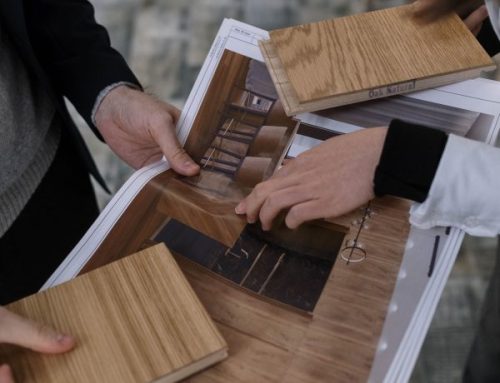
I’ll let you in on a little secret: I too am a recovering perfectionist. And even though I’ve been working in this business for years, I’ve also spent my fair share of time sitting with ideas, samples and floor plans, waiting for that magical moment when every single choice felt 100% right… And it never came.
What I’ve learned, both for myself and my clients, is that perfection paralysis is just fear cleverly disguised as indecision. The turning point, for me, was realizing that rooms don’t reveal themselves all at once, they unfold as you make decisions.
Nowadays, I trust the process a lot more than the plan. I start. I adjust. I swap things out. And somewhere along the way, the room finds its rhythm. Funny enough, the spaces always turn out better when I stop trying to make them perfect and just let them become real. Think “round peg… square hole”.
So how do you overcome perfection paralysis? Let’s break it down:

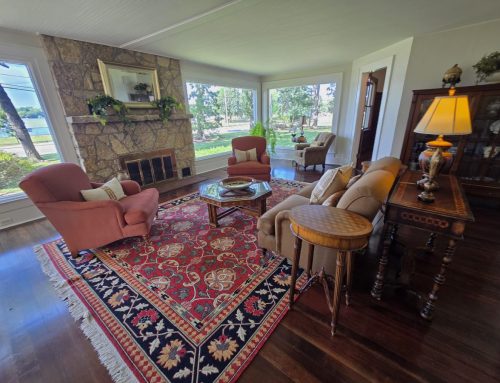
BEFORE
Start With Function, Not Furniture
Before you think about sofas, colors, or coffee tables with suspiciously perfect styling, ask a simpler question:
How do I want this room to live?
Not how it should look. Not how it looked in that magazine. How it functions on a Tuesday night.
-
Is this a kick-back & unwind family room?
-
A polished, rarely-used entertaining space?
-
A hybrid that has to juggle movie nights, homework, and the occasional glass of wine with friends?
Function is your foundation. It quietly dictates layout, scale, and even durability. A room designed for real life will always feel better than one designed for a photo. Try thinking of this step as writing the script before casting the actors or whatever clever analogy comes to mind for you.
Build a Layout Before You Buy Anything
Once you know how the room needs to function, map out the layout. This is where most people skip ahead… and regret it later. Use what you have. Measure your space. Sketch it out if you need to. No art degree required here- just rectangles and honesty. (Trust me, I can barely play tic-tac-toe thanks to my sad drawing skills. But by the grace of God and the basic shapes you learned by the time you were two, anyone can space plan a room!)
Ask yourself:
-
Where does conversation happen?
-
What needs to face what?
-
Where are the natural pathways through the room?
A good layout makes everything else easier. A bad one turns even the most beautiful furniture into nothing but obstacles.
Choose One Anchor Piece
Now and only now can you really start to think about furniture.
Start with a single anchor piece. In a living room, that’s usually the sofa. In a bedroom, the bed. This will be your room’s gravitational center.
So, why just one? Because choosing everything at once is how perfection paralysis sneaks back in. When you focus on one key piece:
-
Decisions feel manageable
-
Your style starts to take shape naturally
-
You give yourself something real to react to and build from
Once that anchor piece is in place, the rest of the room becomes a little easier to envision and less of a guessing game.
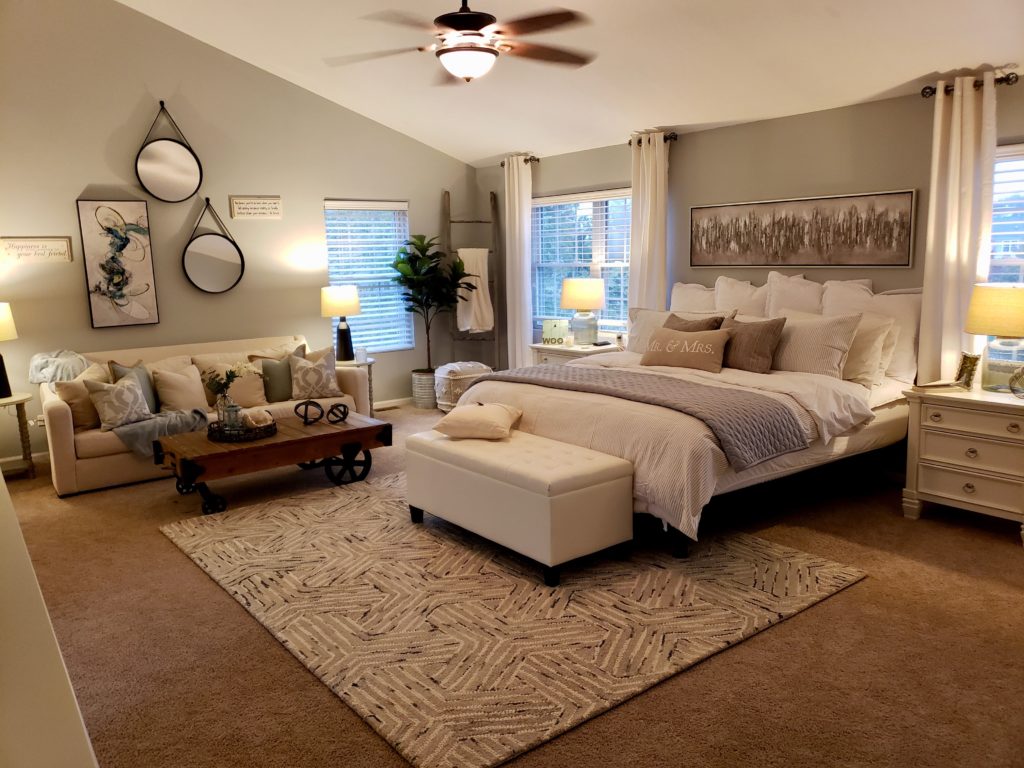
AFTER
Let the Room Evolve (Yes, Really!)
Here’s the important part most DIYers struggle with: you don’t need to have the entire plan figured out before you start. In fact, you shouldn’t.
Great rooms and great designs evolve over time. They adjust. They respond. They get edited.
When you try to lock in every decision before you begin, you create pressure for everything to be “just right” immediately. That pressure is exactly what keeps people stuck. Instead of over thinking, try aiming for direction, not perfection.
A Few MORE TIPS to Help You Break Free From Perfection Paralysis
If you’ve been stuck in the “thinking about it” phase for longer than you’d like, here’s your escape hatch:
1. Make one decision today
Not ten. Not the whole room. Just one. A layout shift. A rug ordered. A paint sample picked up.
2. Lower the stakes
Not every choice is permanent. Most aren’t even expensive to change. Remind yourself of that often.
3. Stop designing in your head
Rooms don’t come together in theory. They come together in real life, with real objects, in real light.
4. Accept that done is better than imagined
An imperfect, finished room will always feel better than the “perfect” room that only exists in your head.
5. Admit your limitations
We’re all good at some things more than others. And we all need help from time to time especially with things which don’t come naturally to us. So, if you’re stuck, need a little push or simply validation of your choices, contact a local decorator (like me) to help point you in the right direction and keep you moving toward your goals.
And last… The Real Secret to Overcoming Perfection Paralysis
Starting is the hardest part. Not because it’s complicated; but because it requires letting go of the idea that you’ll get everything right the first time. Trust me, you probably won’t. Few rarely do!
But, you’ll see that once you take that first step, something shifts. The room starts talking back. Decisions get easier. Momentum builds. The space that once felt overwhelming starts to feel more like possibilities instead.
So, if you’re standing in that room right now, wondering where to begin, here’s your answer: Start anywhere… Just not nowhere!
Happy Decorating from Decor Designs
815-245-2433 or decordesignsinc.com